
Your doctor says your sugar is "borderline" and hands you a leaflet. You don't need a leaflet, you need a plan that fits around office hours, kopitiam breakfasts and family dinners.
In our guide to insulin resistance, we explained how your cells slowly stop responding to insulin. This post is the practical part: everyday habits that improve insulin sensitivity, so the insulin you already make works better. None of them needs a gym membership or special food, and most people can improve insulin sensitivity with small, steady changes.
Why it pays to improve insulin sensitivity
When your cells respond well to insulin, your pancreas doesn't have to overwork, and blood sugar stays steadier after meals. That is how habits that improve insulin sensitivity help keep prediabetes from moving on to type 2 diabetes.
7 habits that improve insulin sensitivity
1. Walk for 10–15 minutes after meals
Working muscles pull sugar out of the blood, and they do it best right after you eat. Instead of sitting down in front of the TV after dinner, take a slow loop around the taman or walk to the mamak and back. Even a short stroll after your biggest meal of the day counts.
2. Build muscle twice a week
Muscle is where most of your blood sugar ends up, so more muscle means more storage space. The NHS advises strength work on at least two days a week. Squats from a chair, wall push-ups or resistance bands at home are enough, and a review of 12 trials in adults over 60 found strength training can improve insulin sensitivity.
3. Protect your sleep
Late nights catch up with your sugar quickly. In a small study of nine healthy adults, a single night of only four hours' sleep made their bodies respond to insulin noticeably worse the next day. Aim for seven hours, keep the phone away from the bed, and skip the late teh tarik.
4. Trim your waist, not just your weight
Belly fat is the most harmful kind for insulin. Malaysia's obesity guideline uses 90 cm for men and 80 cm for women as the waist warning line. You don't need a dramatic diet: in people at high risk, losing 5–7% of body weight lowered their chance of getting type 2 diabetes.
5. Follow the Pinggan Sihat plate
Fill half the plate with sayur and some fruit, a quarter with rice or noodles, and a quarter with fish, chicken, tofu or dhal. Fibre from vegetables, beans, oats and brown rice slows how fast sugar reaches the blood. Ask for "nasi separuh, tambah sayur" at the economy rice stall; our diabetic diet guide for Malaysians has more local swaps.
6. Cut the sugary drinks
Sweet drinks flood your blood with sugar in minutes and give your pancreas no break. Teh tarik, sirap bandung, bubble tea and packet juice are the usual suspects. Step down from kurang manis to kosong, and see our list of better drinks to order at the mamak.
7. Take stress seriously
Long-running stress keeps hormones like cortisol high, and these push blood sugar up and make insulin less effective. Ten minutes of slow breathing, a weekend walk at the park or simply leaving work on time can help. Treat rest as part of your plan to improve insulin sensitivity, not a reward for later.
A simple weekly plan
Don't try all seven at once. For people carrying extra weight, Malaysia's obesity guideline recommends at least 150 minutes of moderate activity a week, with both aerobic and strength exercise. Here is one way to build up to it:
| When | What to do |
|---|---|
| Every day | 10–15 minute walk after dinner; kosong drinks |
| Twice a week | 20 minutes of chair squats, wall push-ups or band work |
| Weekends | A longer walk at the taman or a hike with family |
| Every night | Lights out early enough for seven hours of sleep |
How to tell if it's working
You can't feel insulin sensitivity, but you can track its footprints. Measure your waist once a month, and ask for HbA1c, fasting glucose and lipids at your next check-up. A shrinking waist and steadier numbers are good signs you are starting to improve insulin sensitivity.
Still trying to improve insulin sensitivity even with good habits?
Many of our customers tell us they walk after dinner and drink kosong, yet their check-ups still show borderline numbers. That's when some add extra support alongside their routine.
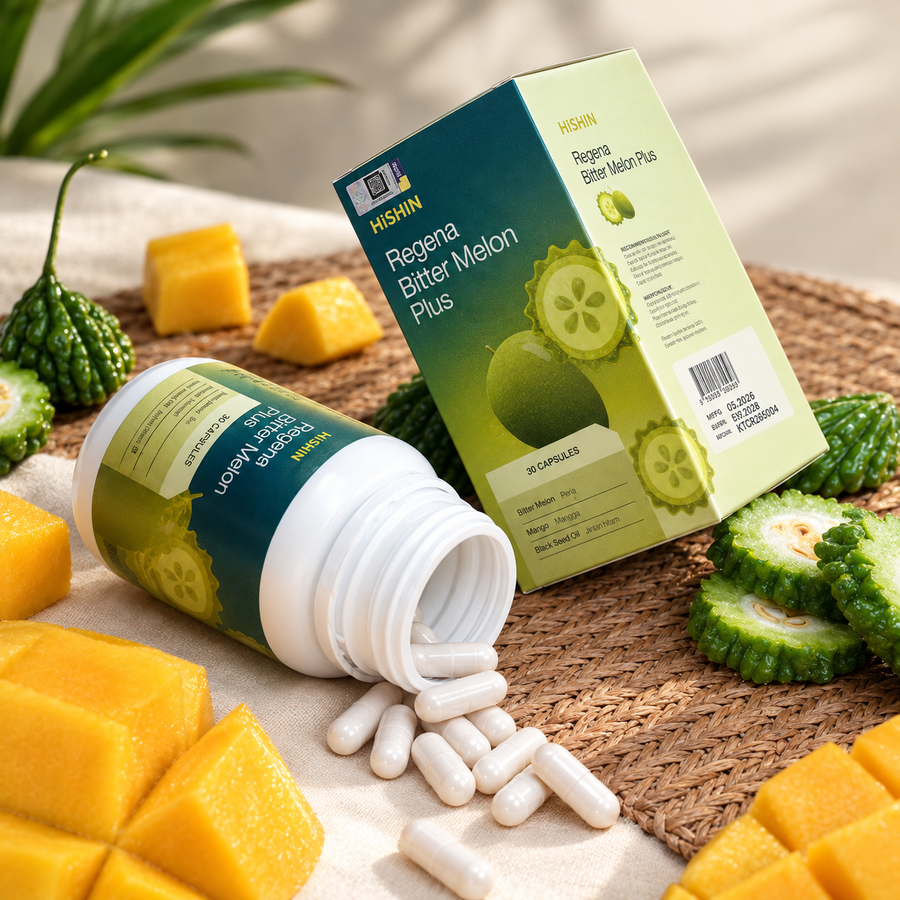
Regena Bitter Melon Plus is Malaysia's only MAL-certified blood sugar capsule, registered with the Ministry of Health (KKM). Each capsule combines three natural ingredients:
- Care300® mango extract — a Swiss patented ingredient with a clinical study published in Planta Medica, supporting insulin sensitivity and helping improve post-meal blood sugar
- Japanese bitter melon peptide — helps slow down sugar absorption
- Antioxidant black seed oil — supports the body's antioxidant defence
Take one capsule after breakfast and one after dinner. The compact bottle slips into your bag, so it goes wherever you makan.
Regena works together with the habits above — not instead of them, and not instead of the treatment your doctor prescribes.
The bottom line
You can improve insulin sensitivity with ordinary Malaysian routines: a walk after dinner, two short strength sessions, proper sleep, a Pinggan Sihat plate and kosong drinks. Pick one or two habits this week, keep them going, and let your waist and check-up numbers show you the progress.
Individual results vary. Regena is a dietary supplement and is not a substitute for medication or medical advice. Please consult your doctor before changing your diet or medication.